
Crop Applications
There is no single drip tape spacing that suits every vegetable field. Even the same crop can require different layouts in sandy and finer soils, or in single row and multiple row beds. Understanding which spacing is being discussed is the first step toward a useful recommendation.
The goal is to supply the intended root zone with an appropriate wetting pattern. Product choice, field layout and irrigation scheduling therefore need to be considered together.
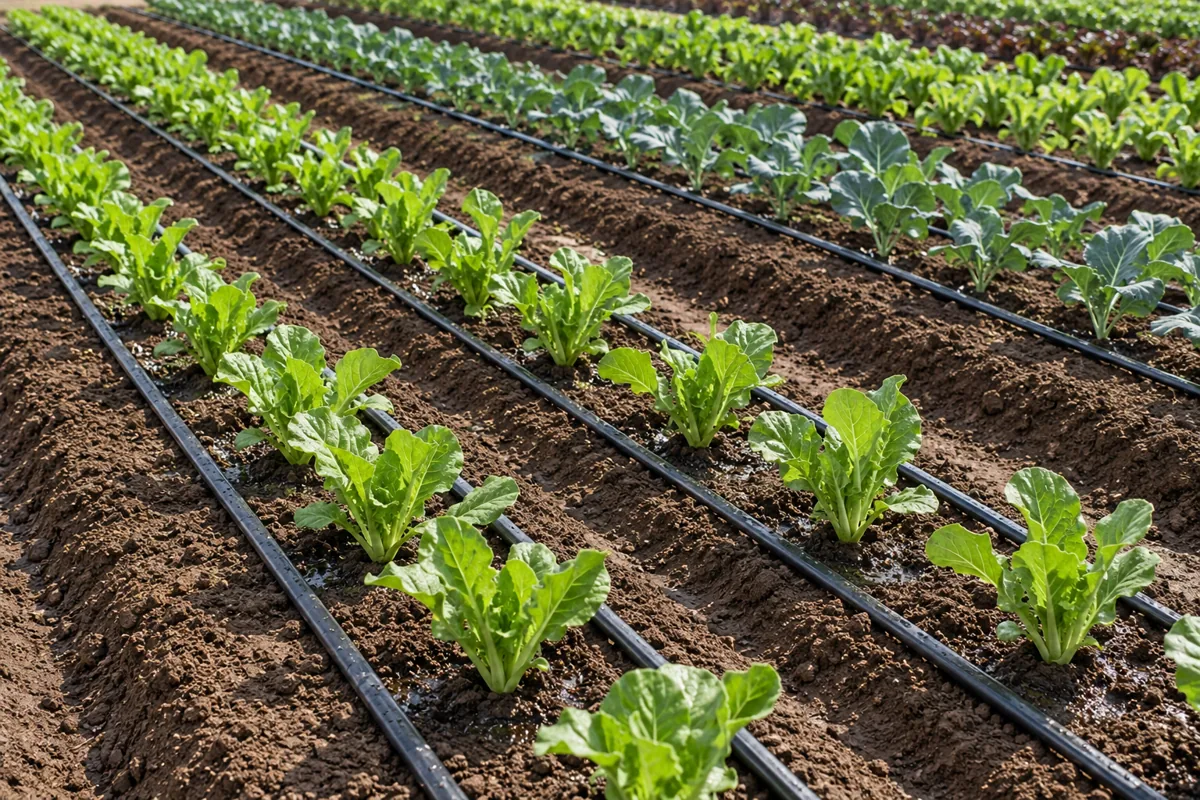
Distinguish emitter spacing from line spacing
Emitter spacing is the distance between outlets along one tape. It is a product specification. Tape line spacing is the distance between adjacent laterals in the field and is determined by the installation layout. An inquiry that simply requests 20 cm spacing should identify which measurement is intended.
Both affect the number of outlets per unit area and the flow required by a zone. Closer emitters or additional lines can increase total demand. Recheck water supply and zoning whenever the layout changes instead of adjusting only the quantity of tape ordered.
Observe how water moves through the soil
Soil texture, structure, layering and initial moisture influence downward and sideways movement. In sandy soil, pay particular attention to whether lateral wetting reaches the target roots. In finer soil, also consider infiltration rate and localized ponding. Surface wetting alone cannot describe the entire root zone.
Test a representative area using the proposed tape and conditions close to the intended operation. Observe during irrigation and after shutdown, and examine moisture at suitable depths. A short trial cannot establish a full seasonal schedule, but it can expose a layout that leaves clear gaps in the intended wetted area.
Match the number of lines to the bed
A bed containing one crop row presents a different problem from a wide bed containing several rows. A centrally placed tape may serve two crop rows only if its wetting pattern reaches the relevant roots on both sides. A wet patch in the center of the bed does not establish that plants near the edges receive enough water.
For closely planted leafy vegetables, compare layouts with multiple lines distributed across the bed. For more widely spaced crops, position the wetting pattern around the effective root zone. Evaluate coverage alongside flow demand and practical installation work. Using fewer lines is not necessarily cheaper if it creates persistent dry areas that require correction later.
Check establishment and mature crop needs
Direct seeded vegetables need suitable moisture where the seed is placed, while established crops develop a larger root system. A layout that supplies mature plants may not keep the full sowing strip adequately moist during germination. Check establishment conditions as part of the trial rather than assuming the later growth stage represents the entire season.
Irrigation frequency and duration should respond to weather, growth stage and soil moisture. If the area between emitters remains dry, extending runtime indefinitely may move water deeper beneath the outlets without supplying the intended neighboring area. Inspect depth as well as width, and reconsider spacing or line position when necessary.
Calculate flow demand before expanding the layout
Consider an illustrative lateral 100 m long, with emitters 0.2 m apart and rated discharge of 1 L/h per emitter. It contains approximately 500 emitters and has a theoretical flow of about 500 L/h at the stated rated conditions. Twenty such laterals operating together would require approximately 10 m³/h.
This example explains the calculation; it is not a recommendation for a particular crop. Use the selected product’s data at the appropriate pressure and account for network losses when checking the actual installation. A water source that supplied one layout may not meet demand after more lines are added.
Estimate tape quantities from the actual arrangement
For a regular area with uniformly spaced parallel lines, a preliminary tape length estimate is the effective irrigated area divided by line spacing, using compatible units. This shortcut is less useful where lines are grouped on beds or boundaries are irregular.
For multiple line beds, count the beds, the lines per bed and the actual line lengths. Exclude roads and other unplanted areas, and handle irregular edges separately. Keep spare material and repair requirements distinct from the calculated installed length so the purchase quantity remains understandable.
Consider access and future planting changes
A layout must also allow weeding, harvesting and machinery movement. Tape that conflicts with working routes is more likely to be stepped on, pulled or damaged. Adjusting line positions or supply entry points may improve access, but any change still needs a check of root zone coverage.
Review the layout when the next crop uses a different bed arrangement. A double row crop followed by closely seeded leafy vegetables may require different line numbers and zoning. Existing materials should be evaluated against the new crop rather than determining the layout simply because they are already available.
Request a spacing discussion using field details
Provide the crop, bed width, rows per bed, plant spacing, soil type, field length and water supply. Include mulch use, mechanical laying plans, slope and any known salinity concerns. These details allow a more useful discussion than requesting a spacing based only on the crop name.
Send us a planting sketch and your water source information. We can help compare emitter spacing, line arrangements and supporting products before you finalize the purchase quantity.
Related articles
How to Choose the Right Drip Tape
Drip Irrigation vs Flood Irrigation for Vegetable Farming
Need help selecting drip tape or matching irrigation components?
Discuss Your Requirements ↗Explore MEKA Products