
Irrigation Methods
Vegetable growers considering a new irrigation method often begin with a cost question. The answer depends on more than the price of equipment. Water availability, field preparation, irrigation labor, energy and the ability to maintain the system all influence the result over a growing season.
Drip irrigation can provide more control over where water is applied, but that advantage depends on suitable design and operation. Compare it with the farm’s actual surface irrigation arrangement rather than with an assumed or poorly defined alternative.
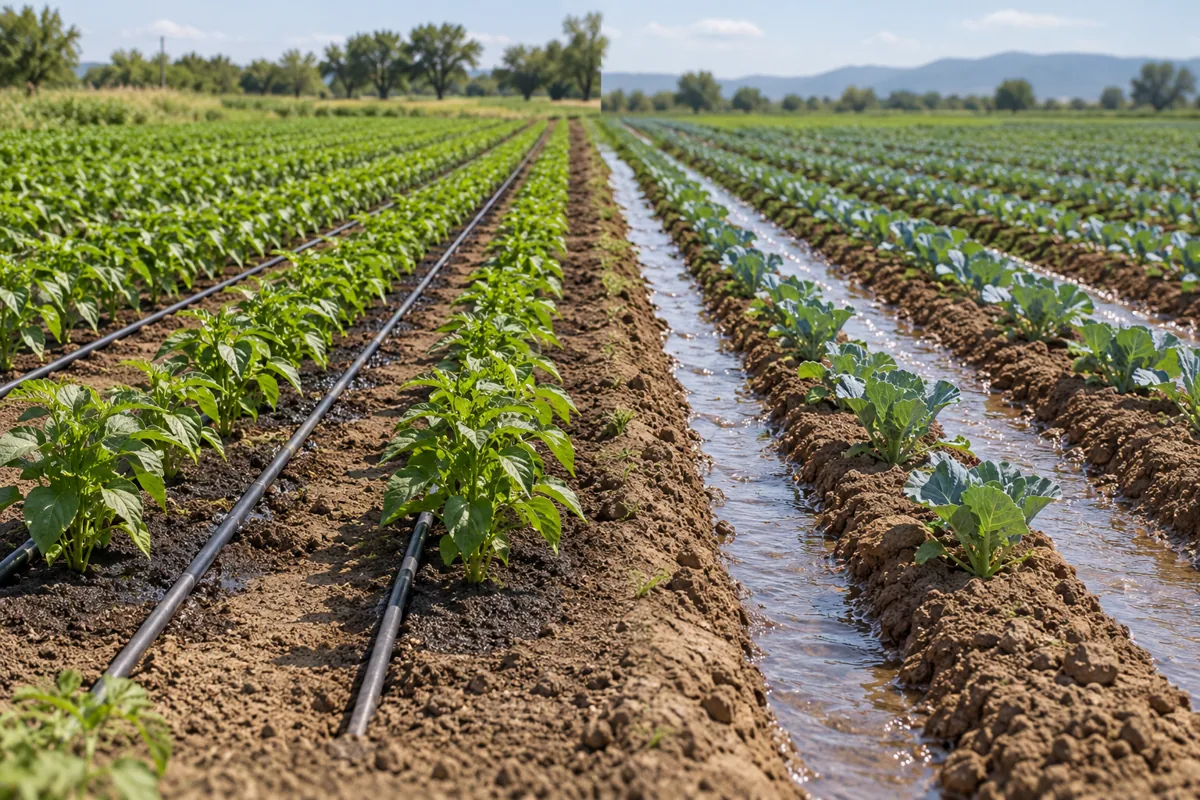
Compare how water reaches the root zone
Drip irrigation delivers water through emitters to selected areas of soil. Lines can be arranged around crop rows and the intended root zone. Flood and related surface irrigation methods distribute water across or along the soil surface, with performance influenced by land leveling, infiltration and management of the incoming flow.
In surface irrigation, differences in water arrival time can affect the amount infiltrating at different locations. Drip irrigation can help manage application more precisely, but leaks, clogging, unsuitable zones and excessive runtime can reduce that benefit. Installing tape does not establish a fixed water saving or yield increase.
Budget for the complete installation
A drip budget may include tape, mainlines, submains, filters, pressure control, valves, fittings and installation labor. A pump or fertilizer injector may also be required depending on existing equipment. Comparing tape prices alone understates the cost of a working system.
An existing surface irrigation arrangement may use channels and field infrastructure already in place. Its budget should still account for land preparation, channel repairs and labor to control the flow. For an established farm, compare the additional cost of conversion; for a new field, estimate construction and operation for both options.
Calculate water and energy separately
Estimate water cost using the farm’s actual charging basis and measured irrigation volume. Pumping energy depends on flow, required head, efficiency and runtime. Although drip tape generally operates at relatively low pressure, the complete system must also overcome filtration and conveyance losses.
Do not assume that switching to drip automatically reduces electricity cost. Record water use, operating hours and energy consumption under the existing method, then compare them with a representative drip trial. Keep the crop, irrigated area and season as comparable as practical, and note the effect of rainfall.
Count all irrigation labor
Surface irrigation can require workers to redirect water, open and close field inlets and monitor progress. Drip zones and controls may reduce some of these activities. However, drip systems also require installation, filter checks, flushing, leak repair and end of season retrieval or removal.
Record labor for irrigation events, routine maintenance and seasonal tasks separately. The level of automation changes both investment and operating work. A practical choice is one that the farm’s staff can operate and maintain consistently, including when other crop tasks become busy.
Match the method to the vegetable layout
Regular crop rows and mulched beds often make it easier to position drip tape. If fertilizer will be applied through irrigation, check the fertilizer, injection equipment, material compatibility and backflow protection arrangements. The ability to inject fertilizer does not remove the need for a suitable operating procedure.
For closely seeded vegetables, inspect moisture coverage during germination as well as later growth. A layout that supplies mature roots may not wet the whole sowing strip adequately. Include establishment requirements when comparing layouts, rather than evaluating only the period when plants are already well rooted.
Identify the constraints before investing
Water containing sediment or organic material may need treatment and ongoing filter maintenance. Significant elevation changes require pressure management. Surface irrigation also faces constraints from terrain, soil infiltration and drainage. List the factors that could prevent dependable operation and estimate the cost of addressing them.
This step helps distinguish a manageable upgrade from a system that the farm cannot yet support. Buying tape before understanding water supply or maintenance arrangements can create costs that were not included in the original comparison.
Test a representative area first
A small trial can show how a proposed drip arrangement works with the farm’s soil, crop and staff. Record equipment costs, installation time, water, energy, maintenance and crop observations. Compare performance over a full growing cycle where possible, rather than judging the result after a few irrigation events.
Changes in plant appearance do not by themselves prove a yield or income benefit. Weather, variety, management and market prices also influence outcomes. Use comparable observations and keep the assumptions behind any financial estimate visible.
Build a full season cost comparison
Separate costs into initial infrastructure, seasonal consumables and routine operation. Pipes, filtration and control equipment may serve several seasons and should be allocated over a reasonable service period. Tape replacement, fittings, retrieval and disposal or recycling arrangements should be included where applicable.
Use recorded costs and water use to assess the practical result. Evaluate income changes cautiously, because a higher selling price or a better season may explain part of the difference. A reliable comparison is more useful than a payback promise based on a single assumed saving percentage.
Plan the next step using your existing conditions
For a farm considering a gradual conversion, begin with the crop, irrigated area, water source, field layout and equipment already available. Select a trial area and determine the components and operating checks it needs before extending the system.
Share those details with us if you would like help identifying drip tape and supporting products for a preliminary budget. A clear configuration makes it easier to compare the investment with the farm’s current irrigation costs.
Related articles
How to Choose Drip Tape Spacing for Vegetables
What to Check Before Buying Drip Tape
Need help selecting drip tape or matching irrigation components?
Discuss Your Requirements ↗Explore MEKA Products